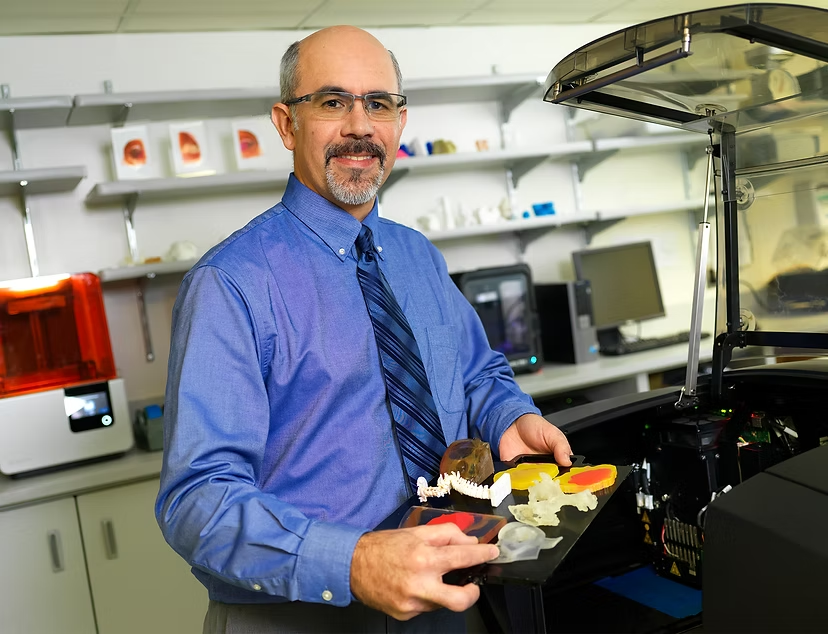
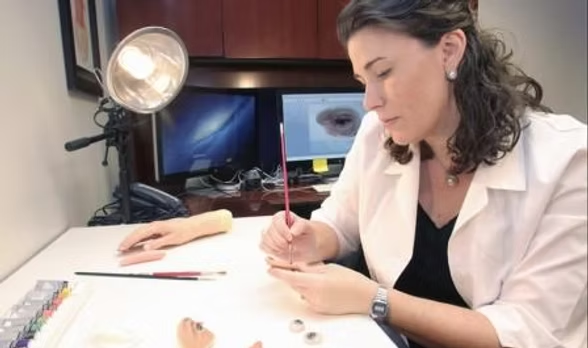
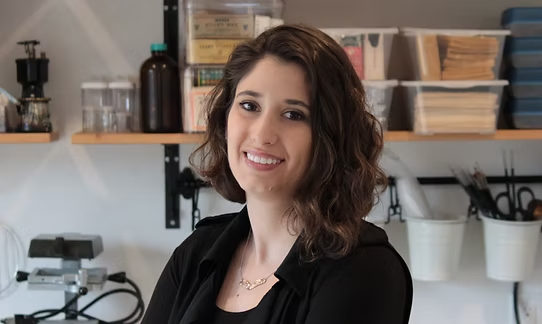
What is Anaplastology?
(Greek) ana- again, anew, upon
plastos- something made, formed, molded
ology- the study of
Anaplastology is a branch of medicine dealing with the prosthetic rehabilitation of an absent, disfigured or malformed anatomically critical location of the face or body. The term anaplastology was coined by Walter G. Spohn and is used worldwide’
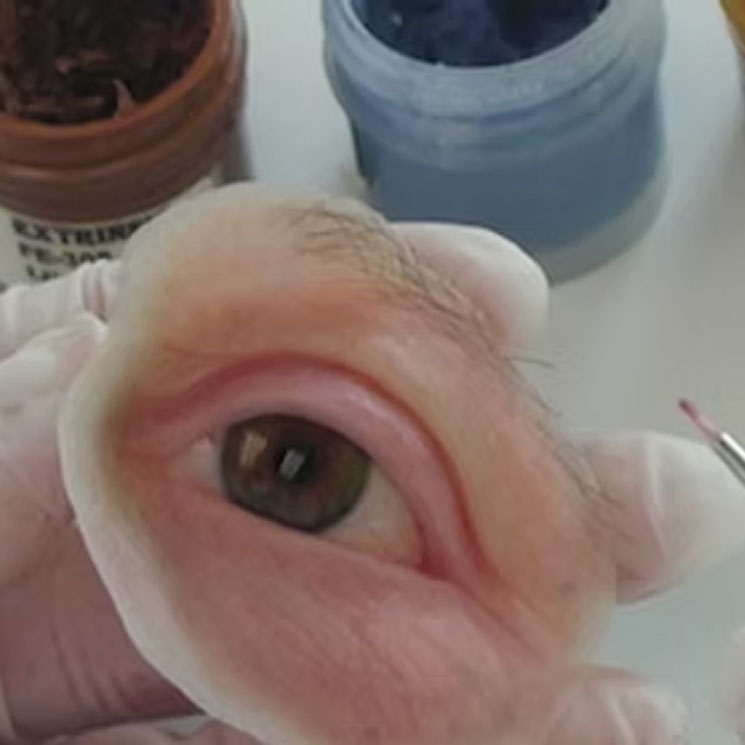
Anaplastologists are specialists in the design and fabrication of realistic and functional facial, body (somato) and ocular prostheses.
CCA Eligability
Taking the Exam
Maintaining CCA
Anaplastology is a profession with deep historical roots in rehabilitative medicine.
For decades anaplastologists have provided reconstructive prostheses and other custom medical devices designed and created for an individual patient to restore symmetry and normal appearance to malformed, disfigured, or absent parts of the human body. Advancements in patient care over the last 20 years have increased the need for a dedicated level of clinical and technical skill necessary to conduct safe and effective anaplastology practice in conjunction with emerging technologies and a higher expectation of quality care. Anaplastologists work in a variety of practice settings utilizing a unique skill set to create innovations in anaplastology and advance quality patient care.
Training in Anaplastology
Clinical Anaplastology is a dynamic field and, like other practices in medicine, it evolves as patient needs evolve and as the availability of new technologies and materials enable improvements in standard practises as well as new solutions to meet patient needs.
What remains as a constant is the competency and professionalism of the Certified Clinical Anaplastologist. Given the wide range of services patient who have lost a part of their body require, there are several educational pathways to becoming an anaplastologist. See what those pathways are here. Once the core educational foundation is acquired, the clinical skills and experience working with patients, required to produce the portfolio part of the CCA application, can be obtained by working under the guidance of experienced professional.
The BCCA does not approve or accredit educational programs designed to prepare individuals for certification.
Suggested anaplastology training programs:
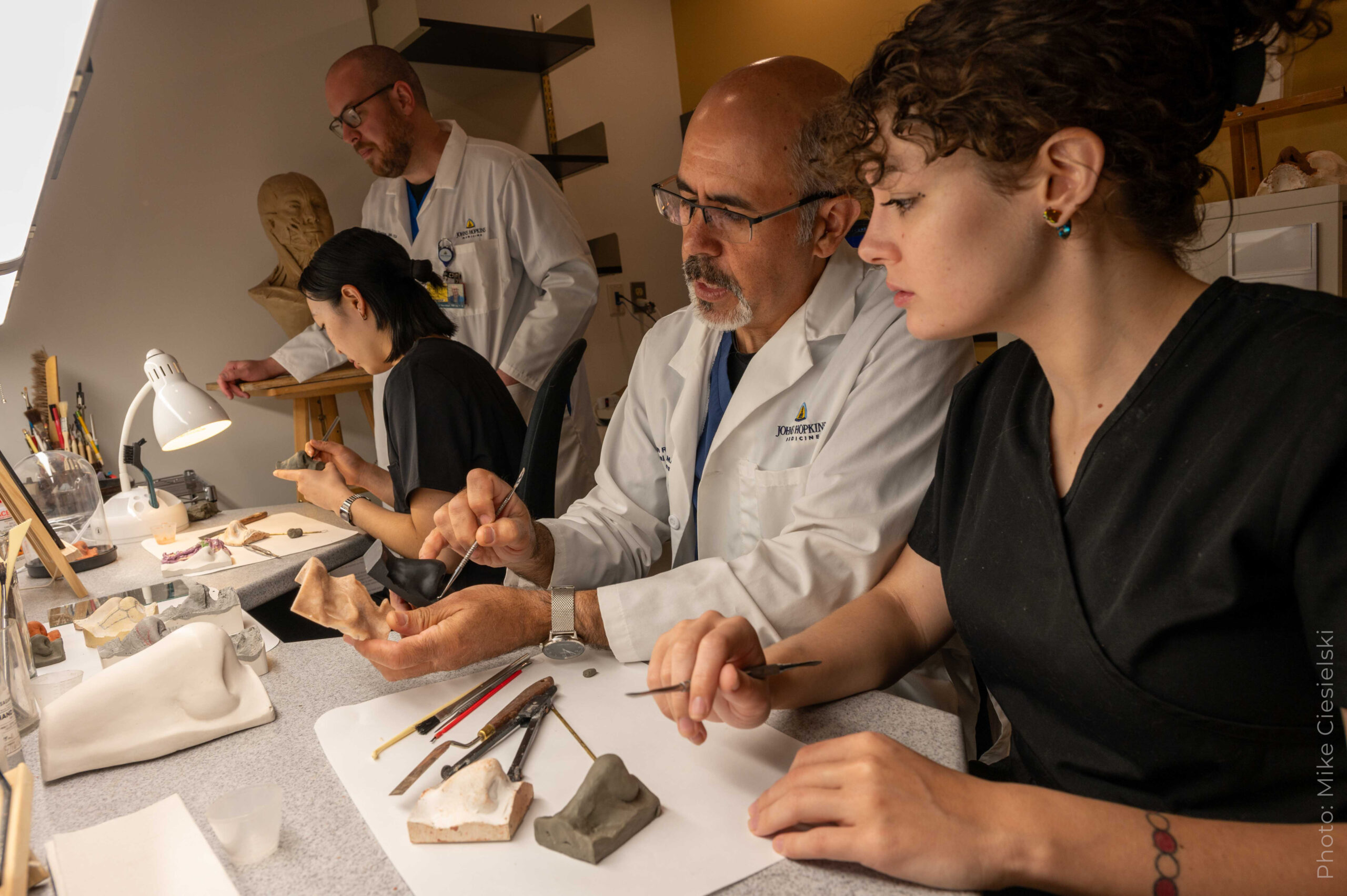
Master of Science (MS) in Clinical Anaplastology Graduate Program at Johns Hopkins University
Department of Art as Applied to Medicine, Baltimore, Maryland, United States; Juan Garcia, Director
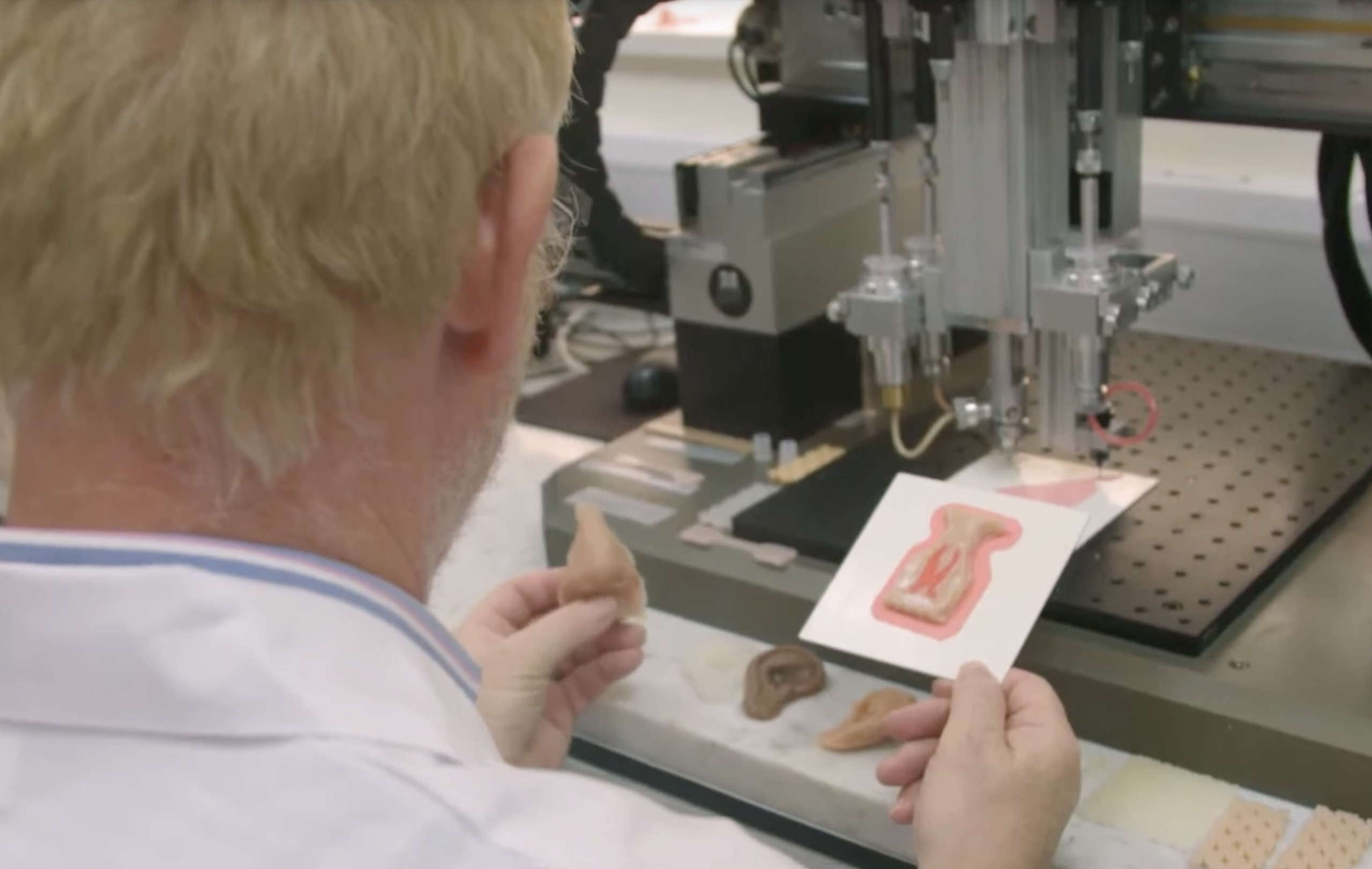
London, England, United Kingdom – King’s College London; Trevor Coward, Course Leader
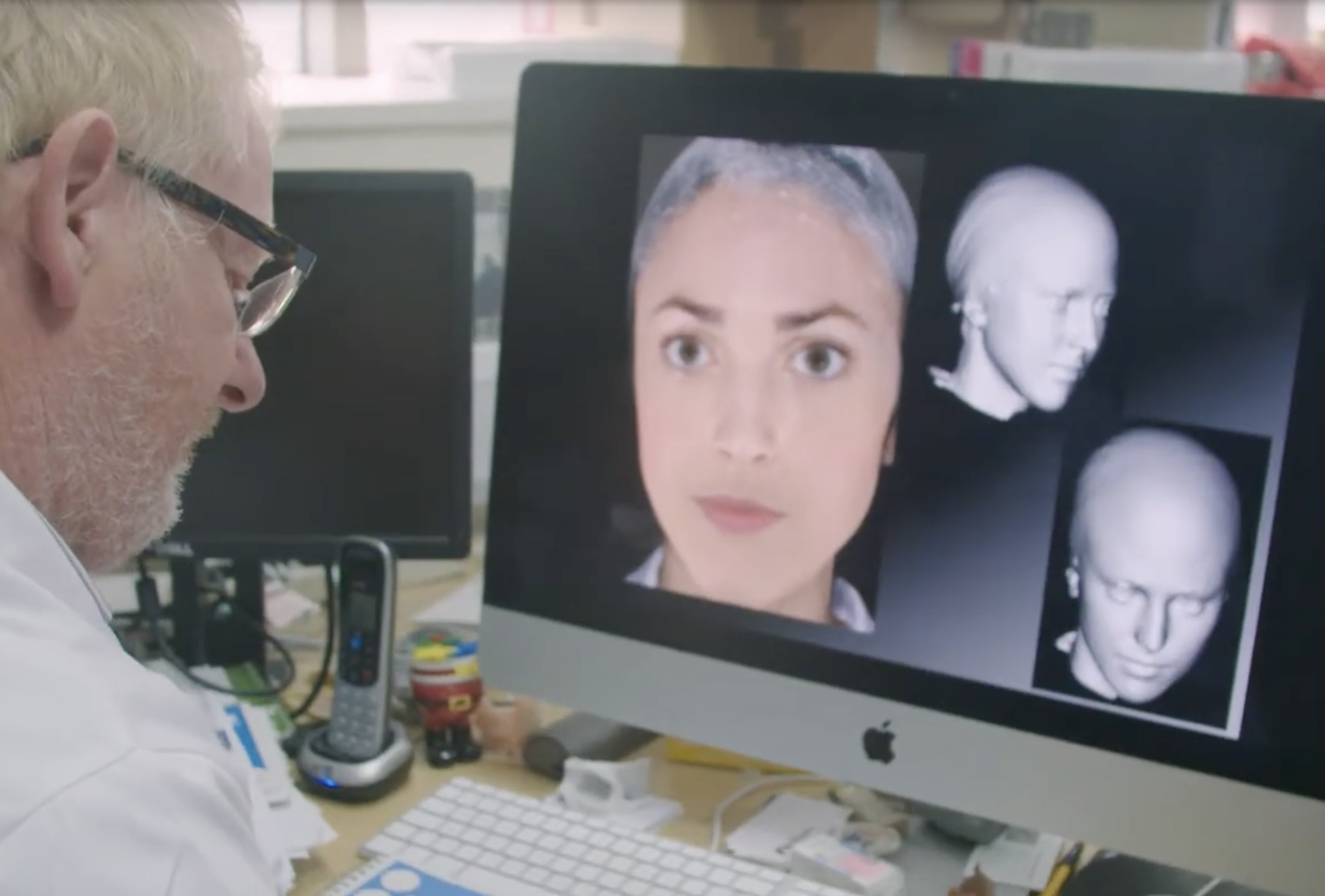

Clinical Sciences (Reconstructive Sciences) – Master of Science (MSc)
United Kingdom – Joint program between Manchester Metropolitan University & King’s College Londonl MSc Clinical Science – Reconstructive Science is designed to develop Healthcare Scientists with specialization in restorative intra & extraoral prosthetics. It is part of a 3-year Scientist Training Program (STP), which includes an NHS work placement.
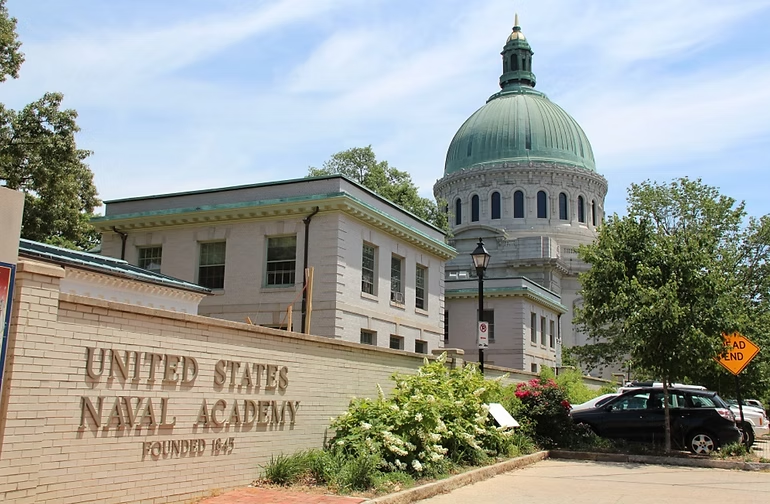
Dental Laboratory Maxillofacial C School – Certificate of Completion
Bethesda, Maryland, United States, Walter Reed National Military Medical Center – Naval Postgraduate Dental School (military only, non-civilian)
More information:
Application Requirements for Certification in Clinical Anaplastology


Other Programs & Organizations
Columbia University Dept. of Dentistry and Oral Surgery/Bronx VA Medical Center
Gesellschaft fuer Chirurgische Prothetik und Epithetik
Institute of Maxillofacial Prosthetists and Technologists
UCLA Maxillofacial Prosthetic Technician and Maxillofacial Prosthetics Residency Program
University of Illinois Biomedical Visualization
Frequently Asked Questions
Consult the questions listed below to see if you find the information you are seeking regarding
Certified Clinical Anaplastology certification. Please contact us at rachel@bcca-cca.com with any questions.
How is an ear prosthesis made?
A Ceritified Clinical Anaplastologists (CCA) has the skills to create life-like facial prostheses, such as an ear prosthesis, that can restore the appearance and precisely fit the underlying anatomy. An ear prosthesis, and other facial prostheses, can be held in place using osseo-integrated inplants. The CCA has the knowledge to interact with other health professionals, such as surgeons and prosthodontists, to guide them in the correct placement of the implants so that the best possible prosthetic restoration takes place when the facial prosthesis is creates by the CCA.
Where can I receive training to become a CCA?
The pathway to becoming a Board Certified Clinical Anaplastologists varies depending on the education and professional pathway of the candidate. The different educational pathways can be found here. Practical experience in a clinical setting can be done by working with an established CCA or prosthodontist to produce the portfolio portion of the CCA application. Locations where the practical experience can be obtained can be found here.
Where can I get training for this profession?
Look at the webiste for the International Anaplastology Association for conferences, courses and webinars. Information on training programs can be found here.
In college, what courses or major should I take to pursue the CCA designation?
Take a look at the Application Checklist found here. There are 5 educational pathways that enable a candidate to be eligible for Certification in Clinical Anaplastology. Choose a major that best suits your general interests and aptitude. You can refer to the Education page found hereand the Application Checklist to see the additional courses each pathway requires.Contact the BCCA for more info and you can ask to be put in touch with a Certified Clinical Anaplastologist (CCA) for more guidedance.
Are there study materials for the exam?
Do you have any recommendations on how to receive first-hand exposure to what anaplastologists do before I make a decision on this career?
Check the list of CCAs we have on the website here to see if there is a CCA that is local that you can consult with. John Hopkins has a certificate course that gives exposure to training and the field of Anaplastology. Information can be found here. The International Anaplastology Association has yearly meetings and reduced costs for students to attend and a person interested in anaplastology can meet people practicing anaplstology at the conference which may help them to find someone willing to help them.
Helpful Links
The International Anaplastology Association serves as an “Information Center” to unite those specialties involved in anatomical restorations and to encourage understanding and acceptance of facial and somato prosthetics among all health care specialties worldwide.
Ameriface
The International Anaplastology Association serves as an “Information Center” to unite those specialties involved in anatomical restorations and to encourage understanding and acceptance of facial and somato prosthetics among all health care specialties worldwide.
The Journal of Facial and Somato Prosthetics provided new and timely information for the professional in the fields of facial prosthetics, prosthetic materials, artificial limb prosthetics, ocular prosthetics, surgical preparation for prosthetics, prosthetic education, and computer applications in prosthetics from 1995 to 2004. Though publication has been suspended, full sets of the 10 years of back issues and individual copies are still available.
AboutFace is a charitable organization providing support and advice to individuals with facial differences and generate as much public awareness and understanding of what living with a facial difference means to those affected.
Formerly known as the National Organization of Competency Assurance (NOCA), the Institute for Credentialing Excellence (ICE) advances credentialing through education, standards, research, and advocacy to ensure competence across professions and occupations.